
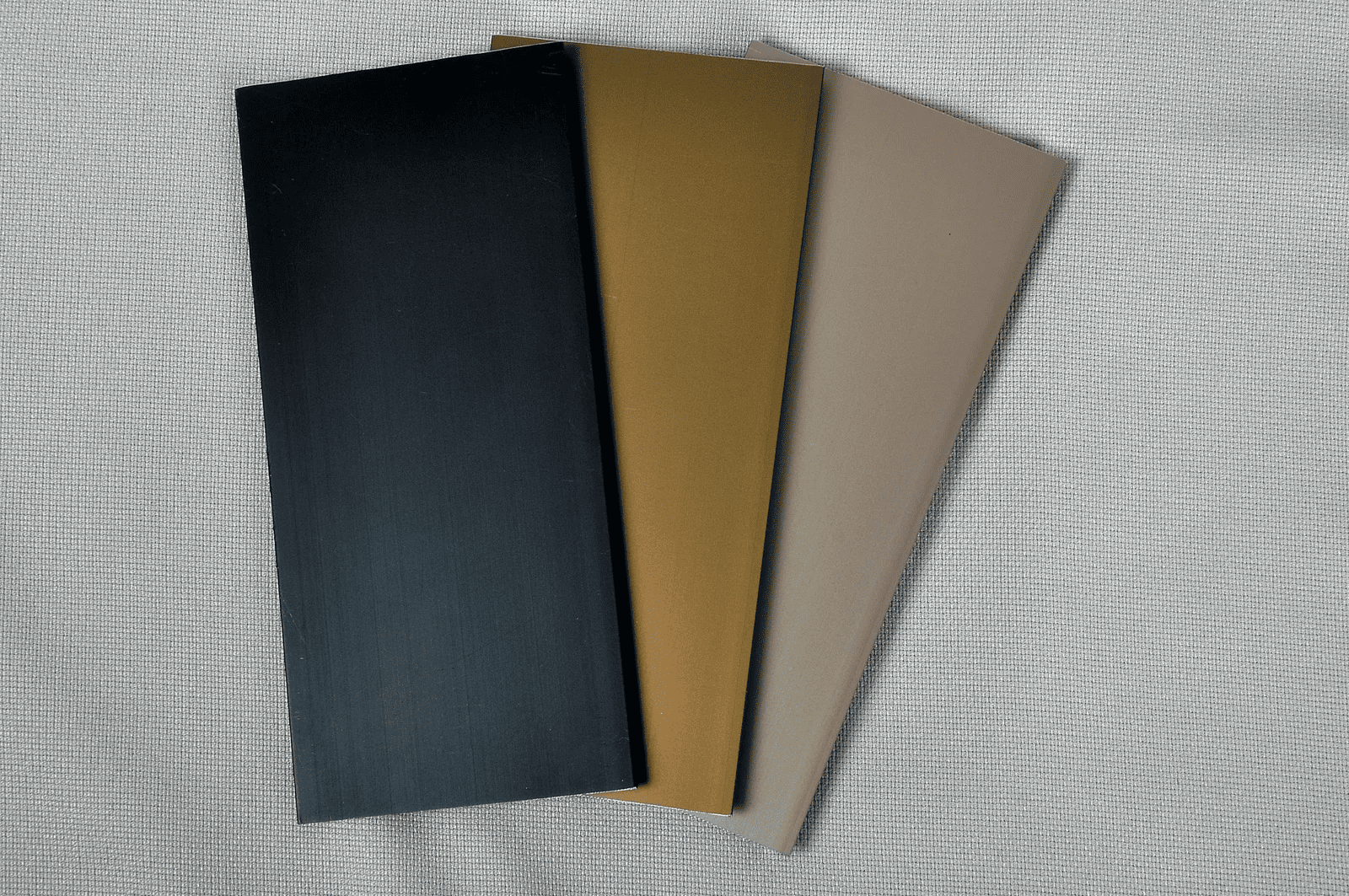
Anodized Finish – Introduction
Anodizing is an electrochemical process that enhances the natural oxide layer on aluminium surfaces, creating a durable, corrosion-resistant, and decorative finish. Unlike coatings that sit on the surface, anodizing becomes an integral part of the aluminium, providing long-lasting protection and an elegant metallic appearance.
Production Process
- 1
Surface Preparation
Aluminium profiles are cleaned and degreased to remove contaminants.
- 2
Etching & Brightening
The surface is treated to achieve the desired texture and appearance.
- 3
Anodizing
Profiles are immersed in an electrolytic solution and subjected to an electric current, forming a controlled oxide layer on the aluminium surface.
- 4
Colouring (Optional)
The anodized layer can be coloured in shades such as bronze, black, champagne, or gold.
- 5
Sealing
The pores of the anodized layer are sealed to enhance durability and corrosion resistance.
- 6
Inspection
Profiles undergo quality checks for coating thickness, colour consistency, and surface finish.
Advantages of Anodized Finish
- ✓Excellent corrosion and weather resistance.
- ✓Highly durable and scratch-resistant surface.
- ✓Long-lasting metallic appearance with superior colour stability.
- ✓Does not peel, chip, or flake.
- ✓Low maintenance and easy to clean.
- ✓Environmentally friendly process.
- ✓Enhanced surface hardness and wear resistance.
- ✓Ideal for architectural, industrial, and decorative applications.